No blockers, agile team, Scrum Team, Sprint planning

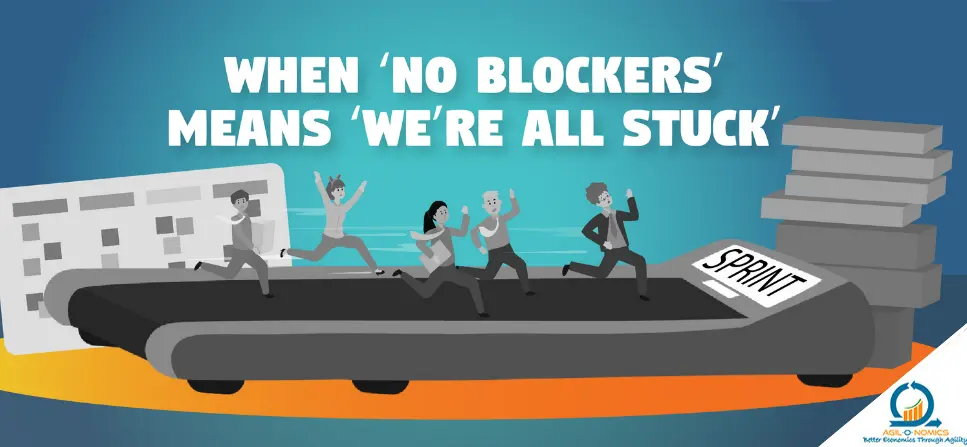
When ‘No Blockers’ Means ‘We’re All Stuck’

Every day, across thousands of teams, the phrase “No Blockers” gets repeated like a badge of efficiency. It signals smooth progress — a sprint in motion, work on track, everything under control. But what happens when the team keeps saying “No Blockers” and still cannot move forward? That’s when the phrase stops being a status and starts being a signal — one we often ignore. Teams rarely grind to a halt because of one clear impediment. More often, the real obstacles live in the gray areas: half-decisions, unclear goals, unspoken concerns, and dependencies no one mentions out loud. These are the blockers that do not fit neatly into a board or ticket. They live in the space between conversations. The Illusion of Smooth Progress Daily check-ins are meant to create visibility, not measure performance. But over time, standups can turn into routines — a quick round of updates where people talk at the process, not to each other. When a team says “No Blockers” day after day, it can mean one of three things: The last two are the silent killers of momentum. And ironically, they’re the ones most teams never discuss. The Hidden Cost of Silence Silence feels safe. It avoids friction, saves time, and keeps the rhythm of delivery intact. But silence also hides learning opportunities. It prevents teams from challenging assumptions, asking for help, or clarifying direction. A team that reports “No Blockers” might actually be one step away from burnout — still working hard, still pushing forward, but disconnected from purpose and clarity. They’re moving, but not aligning. Delivering, but not improving. The most effective teams use their check-ins not to report, but to reveal. They know that saying “I’m blocked” is not a weakness — it’s an act of trust. It means the process works, the team listens, and support is available. Redefining What Progress Looks Like Progress is not just about completing tasks. It’s about learning together — adapting, adjusting, and removing friction as a unit. When the team avoids surfacing real  blockers, they also avoid the conversations that refine their process. Over time, this creates a quiet drift — the team keeps delivering, but the work loses its sharpness and shared intent. True progress happens when every challenge becomes a moment of alignment, not avoidance — when the discussion itself drives improvement, not delay. Leaders and Scrum Masters have a critical role here: to make vulnerability visible. Ask questions that go beyond the checklist: These questions shift focus from status to insight. They turn the standup from a formality into a space for awareness and connection — the foundation of real agility. The New Meaning of “No Blockers” Maybe the goal is not to eliminate blockers entirely. Maybe the goal is to build teams that can talk about them openly — that see friction as feedback, not failure. When teams treat “No Blockers” as an opportunity to check their alignment, not their speed, they uncover what really drives sustainable delivery. Because progress is not silence. It’s conversation.It’s the courage to pause, to question, to admit what’s not working — before it turns into delay. So the next time everyone says “No Blockers,” listen closely.It might mean the team is fine.Or it might mean the team has stopped talking about what truly matters. This post combines the author’s personal thoughts, ideas, and experiences, with some refinement provided by our Agile Bot AgiNomi.
Imitation Trap

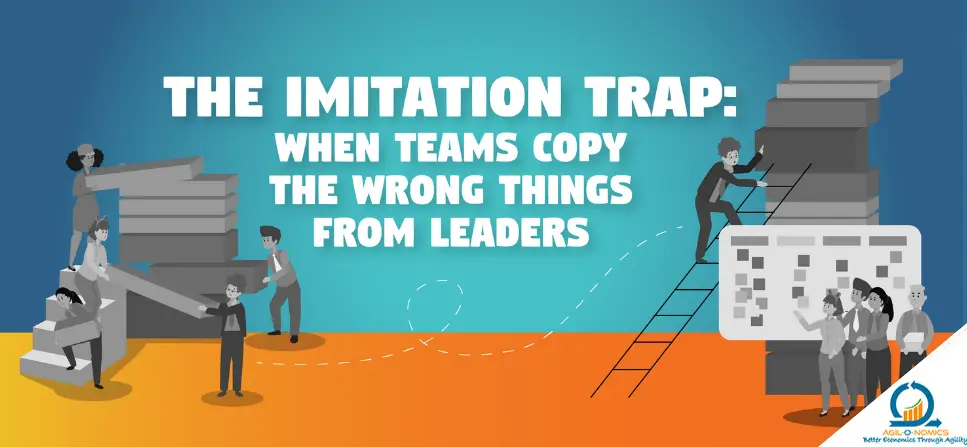
The Imitation Trap: When Teams Copy the Wrong Things from Leaders

Influence is not optional — it’s automatic. The question is what gets replicated.The Imitation Trap happens when teams unconsciously mirror their leaders — not their best intentions, but their daily actions, reactions, and priorities. It’s rarely deliberate. People simply learn by observing what earns approval, what gets ignored, and what drives results. Over time, these patterns form the true culture of an organization — regardless of what’s written on the walls or presented in leadership slides. What Teams Really Copy Leaders often assume their teams mirror their vision or strategy. In reality, teams imitate behavior long before they internalize belief. When a leader rushes through meetings, others start to rush. When a leader avoids difficult conversations, so does everyone else. When a leader celebrates output over learning, the team quickly learns what really matters. This is the Imitation Trap — the quiet transference of habits that shape how people think, decide, and deliver.It’s not the speeches or slogans that set the tone. It’s the everyday rhythm: how leaders respond under pressure, how they handle uncertainty, and how they treat people when nobody’s watching. The Hidden Cost of Unexamined Influence The Imitation Trap is not inherently negative. Imitation is how humans learn. The problem arises when leaders are unaware of what’s being imitated. A manager who multitasks through meetings might believe they’re modeling efficiency. But the team sees distraction. A product owner who changes priorities mid-sprint might think they’re staying adaptive. The team experiences instability. Even well-intentioned leaders fall into this trap when urgency overshadows clarity. And, it can be costly.  Teams begin to reflect inconsistency instead of alignment. They mirror busyness instead of focus. And the longer this continues, the harder it becomes to trace problems back to their true source. Breaking Free from the Imitation Trap Escaping the Imitation Trap starts with awareness. Leaders must recognize that their smallest actions carry the most weight. A shift in tone, a delayed response, or a visible reaction can reinforce or reshape culture in real time. It begins with three questions every leader should ask: Once awareness sets in, change can follow. Model the behaviors you want repeated — patience, clarity, curiosity, respect, and above all centeredness amidst chaos. Demonstrate learning by example, not by mandate. When leaders own their mistakes publicly, they make accountability safe for everyone else. When they pause to listen instead of reacting, they teach the team to think before it moves. Building Intentional Influence Great leadership is not about control; it’s about conscious influence. The leaders who create lasting impact are those who understand that culture is not built through communication plans — it’s built through observation and repetition. Every hallway conversation, sprint review, or quick decision becomes a lesson in what the organization truly values. The best leaders use that awareness intentionally, turning everyday moments into examples of focus, empathy, and adaptability. The real measure of leadership is not how people act when they’re being watched — it’s how they act when they’re not. That reflection tells the story of influence done right. The Bottom Line The Imitation Trap reminds us that leadership is not about managing tasks — it’s about managing examples. Influence spreads faster than intention. Teams don’t just follow direction; they follow demeanor. So, the question is not whether your team imitates you — they already do.The question is: what exactly are they learning from you every day? This post combines the author’s personal thoughts, ideas, and experiences, with some refinement provided by our Agile Bot AgiNomi.
Automation, Agile team

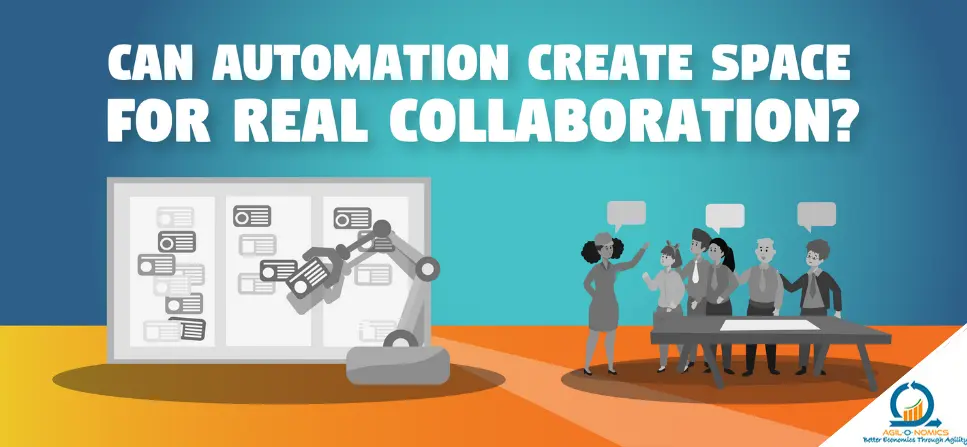
Can Automation Create Space for Real Collaboration?

We used to think automation was about efficiency. Fewer clicks, faster handovers, shorter cycles. But somewhere along the way, “automate everything” became the new productivity gospel — and the more we automated, the less we talked. Now, teams stand surrounded by digital tools that do most of the talking for them — dashboards light up with status, notifications scream updates, and metrics give the illusion of control. Yet, behind all this data movement, the real collaboration — the human conversations that shape value — often goes missing. So, can automation actually create space for collaboration, or does it risk replacing it entirely? The Promise That Slipped Through the Cracks Automation was never the enemy. It was supposed to supercharge teams — to take away the repetitive noise so people could focus on creativity, strategy, and real decision-making.But that promise only works when technology amplifies intent, not replaces it. In too many teams, automation turned into another process layer. Instead of freeing people, it made them interpreters of their own tools. They spend more time syncing boards than syncing ideas, and while the system hums perfectly, the purpose starts to fade. Real collaboration is not about how many automations we can wire up — it’s about how much clarity those automations give us to do better work together. The Human Signal in the Automated Noise When every workflow, ticket, and message is instantly processed, the signal can get lost in the speed. We start mistaking activity for alignment. That’s where leadership and intent matter.A process that works is not the one that automates the most; it’s the one that lets people see the whole picture. It’s about building systems that invite discussion — not systems that make conversation optional. If automation tells you that something is delayed, but no one feels responsible to ask why, then collaboration has already failed. Tools can surface the work, but they cannot surface the care behind it. Technology That Knows When to Step Back The best use of technology and tools is not to replace our conversations — but to prepare us for them.Automation should handle the predictable, the measurable, the repetitive — so that people can handle what machines cannot: context, empathy, judgment. AI can generate summaries, identify dependencies, and highlight risks faster than any project manager ever could. But it cannot replace the nuance of a conversation that resolves a conflict or a brainstorm that sparks innovation. The future of collaboration is not human versus machine — it’s about designing tools that know when to speak, and when to stay silent.. The Real Question for Teams Today The question is not how much we can automate, but what should never be automated. Automation can accelerate output, but it cannot replace the essence of collaboration — the human connection that fuels trust, learning, and shared accountability. The moment every action becomes a workflow and every thought becomes a notification, teams begin to confuse coordination with collaboration. Progress turns into motion. Alignment turns into status. And purpose slowly slips beneath the surface of dashboards and metrics. There’s a difference between a team that’s moving fast and a team that’s moving together. The former operates with efficiency; the latter operates with intent. When automation creates space instead of substitution, something powerful happens. Teams begin to breathe again. They take the time to ask why before how. They rediscover the value of deep discussions — the kind that challenge assumptions, clarify priorities, and build mutual respect. They stop chasing the illusion of constant activity and start building the kind of alignment that endures beyond sprints and deadlines. In that space, the process evolves naturally.People learn to trust each other’s judgment, not just the system’s logic. Conversations replace checklists. Ideas emerge between silences, not in chat threads. Collaboration becomes less about updates and more about outcomes — the ones that truly matter. That’s when productivity stops being mechanical and starts being meaningful.That’s when technology and tools serve their real purpose — amplifying human intelligence, not replacing it.So, can automation create space for real collaboration? Yes — but only if we remember that collaboration is not a feature to configure. It’s a relationship to protect. This post combines the author’s personal thoughts, ideas, and experiences, with some refinement provided by our Agile Bot AgiNomi.
We Keep Talking About Flow — But Forget What’s Actually Moving

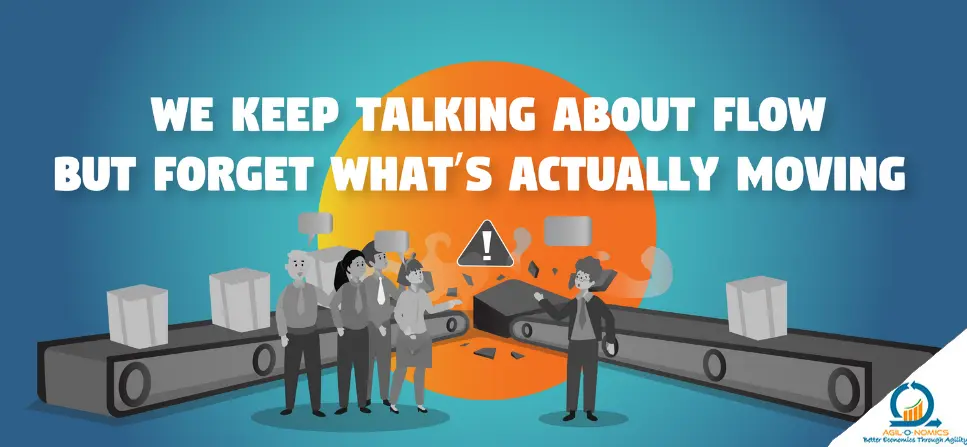
In today’s fast-paced world of project management, everyone talks about flow. Teams map it, measure it, and optimize it. Leaders want smoother handoffs, fewer bottlenecks, and faster cycles. But amid the obsession with flow efficiency, we often forget to ask one essential question: what’s actually moving through the system? Because flow, by itself, means nothing if what moves is not valuable. We can streamline processes, automate transitions, and visualize progress all we want — but if the work lacks meaning, if the outcomes don’t connect to real needs, we’re simply getting better at moving noise. When Flow Becomes the Goal Flow was never meant to be the goal. It was a signal — a reflection of how healthy a team’s delivery system is. But in many organizations, flow has become an end in itself. Teams race to optimize metrics like throughput or cycle time without stopping to reflect on whether what’s flowing is valuable in the first place. It’s like polishing a conveyor belt without checking what it’s carrying. Flow is not progress when it’s full of low-impact work. Yet that’s what often happens when success is defined by movement rather than meaning. We celebrate speed, but not substance. We track velocity, but not value. And in the process, we lose sight of why we built these systems at all. Supercharging Teams Through Meaningful Movement To supercharge teams, leaders need to reconnect flow with purpose. The healthiest flow systems don’t simply move tasks efficiently — they move outcomes that matter. That means work should flow through teams that understand context, customers, and priorities. AI and automation can help, but they must enhance decision-making, not replace it. Smart systems can flag delays, surface dependencies, and help teams visualize value streams. Yet technology alone cannot decide what deserves to move first. That’s where leadership comes in. Leaders define the “why” behind the work. They help teams see how each delivery connects to a broader mission. When teams move with that clarity, the flow stops being mechanical — it becomes meaningful. A Process That Works Because People Care A process that works is not the one that moves fastest — it’s the one that moves purposefully. Tools and frameworks can help standardize how work moves, but they should never dictate why it moves. To build processes that truly work, organizations must: When people understand what’s actually moving, flow transforms from a mechanical process into a human-centered one. It becomes a shared commitment to move things that matter. Technology, Tools, and the Illusion of Progress Today’s tools give an incredible illusion of progress. Dashboards show motion everywhere — charts trending up, boards clearing out, reports showing completion. Yet the truest measure of progress is not the number of items moved, but the impact of what was delivered. AI-driven tools can help reveal this balance by linking work movement to outcomes. They can identify patterns that show whether flow correlates with real customer value. When paired with human judgment, this becomes powerful. But when left unchecked, tools risk amplifying the wrong kind of movement — fast, impressive, and meaningless. Flow That Matters In the end, project management is not about perfect flow — it’s about purposeful movement. It’s about people who understand why their work matters and systems that make it easier to deliver that value. Flow should never be a finish line. It should be a mirror — reflecting how clearly a team understands its purpose and how effectively it turns that purpose into delivery. Because the real measure of success is not how fast things move. It’s what actually moves — and why. This post combines the author’s personal thoughts, ideas, and experiences, with some refinement provided by our Agile Bot AgiNomi.
project management, flow efficiency

When Accountability Vanishes — Who Holds the Line for Delivery?

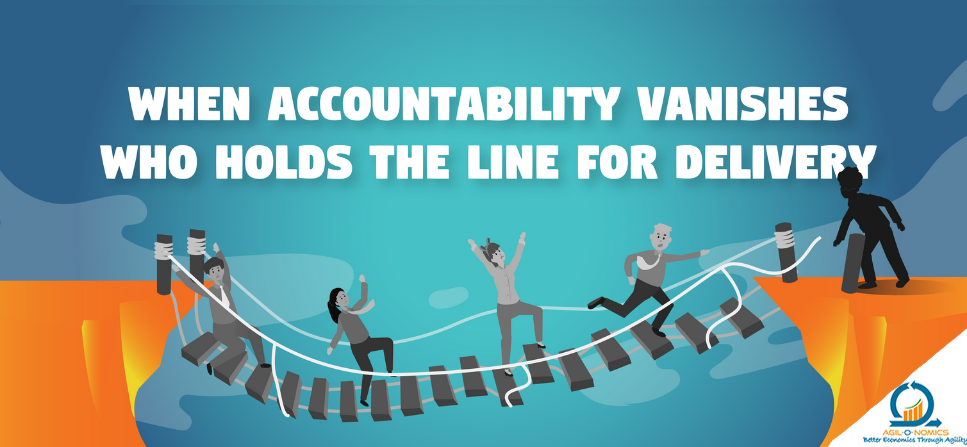
In every organization, delivery depends on more than plans and processes. It depends on accountability — that invisible thread connecting commitment, clarity, and follow-through. When that thread weakens, delivery falters, and no tool, dashboard, or ceremony can hold the line for long. Teams often begin strong. They have a shared goal, a delivery rhythm, and confidence in each other’s roles. But over time, something shifts. Ownership blurs. Deadlines slip. The sense of shared responsibility fades into routine. Work gets done, yet no one can quite say who owns the outcome. The system still moves, but the energy behind it has thinned. The Disappearing Act of Ownership Accountability rarely disappears in a single moment — it erodes. It fades when priorities shift faster than context is shared. It weakens when leaders mistake visibility for alignment. It collapses when everyone assumes “someone else” will follow through. Modern project management tools give us impressive visibility: who’s assigned, what’s due, what’s blocked. Yet these same tools can create an illusion of control. When every task has an owner on paper, it’s easy to believe ownership exists in practice. The truth is, ownership isn’t a column in a tracker — it’s a mindset that lives in the team. Without that mindset, the flow of delivery becomes mechanical. Teams move work items forward, but meaning and purpose drain away. The question shifts from “Are we achieving our goal?” to “Is my part done?” — and the difference between those two questions determines the strength of delivery. Supercharging Teams with Real Accountability Technology and process should exist to strengthen human connection, not replace it. Accountability grows in teams that talk openly about expectations and outcomes. It grows when leaders model responsibility, not blame. AI and automation can now predict delays, identify blockers, and summarize progress in real time — powerful capabilities for any delivery team. But these tools cannot replace the human discipline of ownership. They can surface risks, yet they cannot care. They can notify, yet they cannot commit. To supercharge teams, accountability must shift from who is responsible for the task to who is committed to the result. That shift changes everything: Accountability, in its truest form, is not enforced — it’s chosen. The process works — because the people behind it do. A strong process doesn’t hide behind structure. It works because people understand why it exists and how it enables delivery. When accountability fades, the process becomes heavy — meetings feel obligatory, updates feel rehearsed, and learning stalls. To create a process that truly works, leaders need to: AI can enhance each of these — surfacing insights, mapping dependencies, and reducing manual work. But accountability still depends on the people using it. The Line Between Delivery and Drift When accountability vanishes, delivery does not fail overnight — it fades quietly. Teams start meeting expectations instead of exceeding them. Discussions turn cautious. Risks go unspoken. The culture of ownership gives way to compliance. So, who holds the line for delivery? The answer is simple — everyone who believes the outcome matters. Every person who refuses to let “done” mean “almost.” Every leader who treats accountability not as control, but as commitment. Technology will keep evolving, but accountability will always remain human. And in the end, that’s what keeps delivery real.

Are We Moving Fast or Cutting Conversations Short?

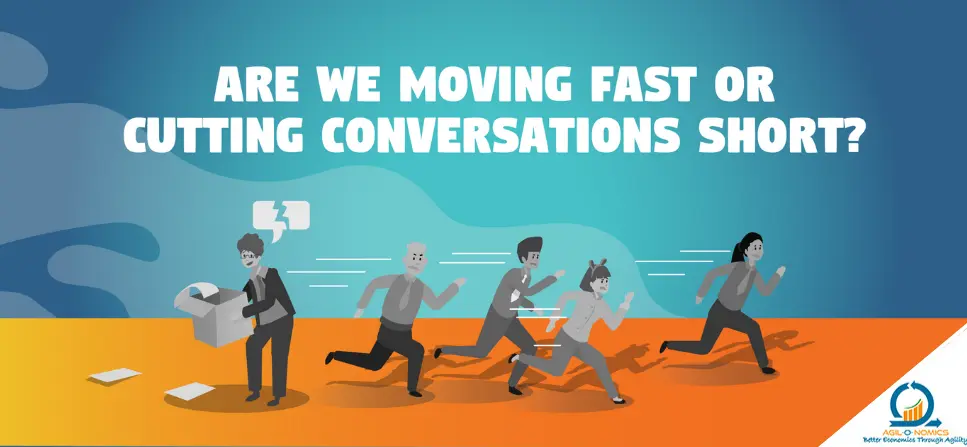
Modern teams pride themselves on speed. Short meetings, quick cycles, and streamlined rituals are designed to keep momentum high. On paper, it looks efficient: the stand-up stays within 15 minutes, the planning session is wrapped in two hours, and retrospectives end right on schedule. But beneath the surface, another story unfolds. Conversations are cut mid-thought. Insights surface but are pushed aside in the name of timing. Complex issues get logged, only to be revisited sprint after sprint without resolution. This is the hidden cost of working fast: unfinished conversations. Teams Stuck in Mid-Sentence In many environments, the cadence of rituals shapes the way people talk. Stand-ups focus on progress updates, but when a blocker sparks meaningful discussion, the timer shuts it down. Retrospectives raise real pain points, but there’s rarely space to explore them deeply. Even backlog refinement turns into speed dating with tasks—quick assessments, then on to the next. The very structure that keeps teams moving forward also fragments the dialogue that builds real understanding. People leave meetings with half-finished thoughts, carrying them into Slack threads, side chats, or nowhere at all. When Process Becomes the Limiter Process is meant to help, not to hold teams back. A process that works balances flow with depth. It ensures progress without suffocating the very conversations that unlock collaboration, creativity, and innovation. The problem arises when the process itself becomes too rigid. Timeboxes and cadences prevent drift, but they also make it easy to push the harder issues out of view. Recurring misalignments stay unresolved. Cross-team challenges are noted but never addressed. Questions linger sprint after sprint because the space to answer them doesn’t exist. In this way, the process stops supercharging teams and starts limiting them. The Attention Tax Living in a world of unfinished conversations creates what might be called an attention tax. Everyone moves forward, but not with full clarity. Teams are busy, but often not aligned. Issues feel familiar because they reappear in cycle after cycle, never fully solved. The charts may show progress. The backlog may shrink. Yet underneath, there’s fatigue—an unspoken frustration that the important conversations always seem to stop mid-sentence. Building a Process That Truly Works The answer is not in abandoning the structure. Without guardrails, discussions can spiral endlessly. The solution lies in recognizing when speed undermines depth, and making deliberate space for the conversations that matter most. Practical ways to strengthen the process include: A process that works doesn’t measure success only by how short meetings are. It measures success by how well conversations translate into shared understanding, decisions, and meaningful action. The Role of Technology and Tools Technology and tools can either magnify the problem or help solve it. When teams rely only on dashboards and trackers, dialogue becomes secondary, and unfinished conversations multiply. But when tools are used to capture insights, structure deeper collaboration, and keep discussions alive between rituals, they can extend the value of face-to-face time. The goal is not to replace dialogue but to ensure it continues—sustained, accessible, and actionable. The Point We Can’t Lose Speed is important. Flow is necessary. But when every conversation is cut short in service of moving fast, the team pays a hidden cost: partial understanding, recurring mistakes, and shallow alignment. Supercharging teams is not only about keeping the pace high. It’s also about creating a rhythm where dialogue runs deep enough to fuel real progress. When process and tools serve that purpose, teams don’t just move quickly—they move together, with clarity and impact.

True test of leadership

Where Leadership Really Gets Tested

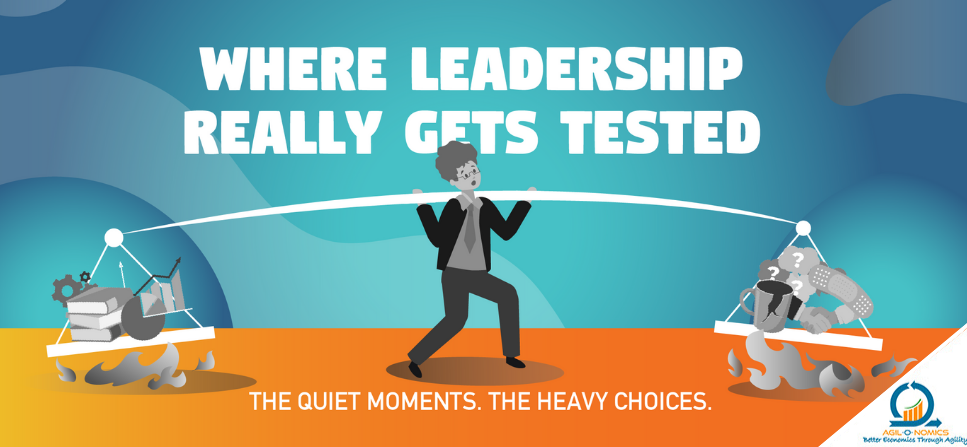
Leadership often looks glamorous from the outside—vision statements, big decisions, high-profile wins. But ask those who practice it every day, and a different picture will emerge. Leadership can not be defined by the stage moments alone; it needs to show up in the quiet, often overlooked situations that shape how teams work together. How you respond to conflict.How you handle mistakes.How you create clarity in the middle of uncertainty. These are the moments that ripple through an organization. And they are the moments where leadership feels the heaviest. The Human Side of Supercharging Teams Every leader wants a team that feels energized and capable of achieving great things. Yet “supercharging” a team is not merely about motivational speeches or pushing for higher velocity. It should start with the smaller actions that build trust and momentum over time. When leaders treat these moments with care, teams respond with openness, resilience, and commitment. That is how performance is inspired—not through pressure, but through character consistently applied. Why Process Matters More Than Style Leadership is often framed as a personal trait: charisma, confidence, decisiveness. While these qualities help, they are not enough to sustain teams over the long run. What keeps teams healthy and productive is a process that works for them. A process should not be about bureaucracy or strict control. It is a repeatable rhythm that supports both delivery and connection. Leaders who design environments where collaboration flows smoothly reduce friction and free people to focus on meaningful work. Some hallmarks of a process that works include: When leaders shape processes that respect people’s time and attention, the result is stronger alignment, higher engagement, and fewer recurring frustrations. Process, done right, is not a limiter—it is an enabler. The Role of Technology and Tools No discussion of modern leadership is complete without acknowledging the weight of technology. Tools shape how people work, communicate, and collaborate. They can either amplify leadership or undermine it. For example:1. dashboards and reporting tools give leaders visibility, but if used poorly, they can reduce people to numbers.  2. Collaboration platforms connect teams, but without clarity, they can multiply noise instead of focus. The key is not the tool itself but how leadership uses it. Leaders who use technology to extend conversations, capture insights, and make decisions transparent help their teams work smarter. Leaders who use tools as surveillance mechanisms or blunt metrics damage trust and motivation. Technology should never replace leadership—it should strengthen it. When used thoughtfully, tools make it easier for leaders to provide clarity, for teams to collaborate, and for organizations to adapt quickly. The Heaviest Part of Leadership So where does leadership feel the heaviest?Often in the tension between Leaders are pulled in many directions—deliver results, empower teams, adopt new technologies, refine processes. The weight comes from knowing that every decision sets a tone. Choosing to prioritize numbers over people, or process over conversation, may seem small in the moment but has long-term effects on culture. The leaders who carry this weight well are not perfect. They are the ones who remain intentional. They know that leadership is not about avoiding mistakes but about how they respond when mistakes inevitably happen.  They know that clarity is not about having all the answers but about providing direction when the path is unclear. And they know that the role of leadership is not to be everywhere, but to create conditions where teams can succeed together. A Different Kind of Measure Leadership will always be tested—not in the grand moments but in the everyday decisions that shape how people feel and work. When teams feel supercharged, when processes reduce friction instead of adding it, and when technology supports rather than distracts, leadership is working as it should. And if those pieces are missing, no amount of vision or charisma can fill the gap. Because in the end, the true test of leadership is simple: does it help people do their best work?

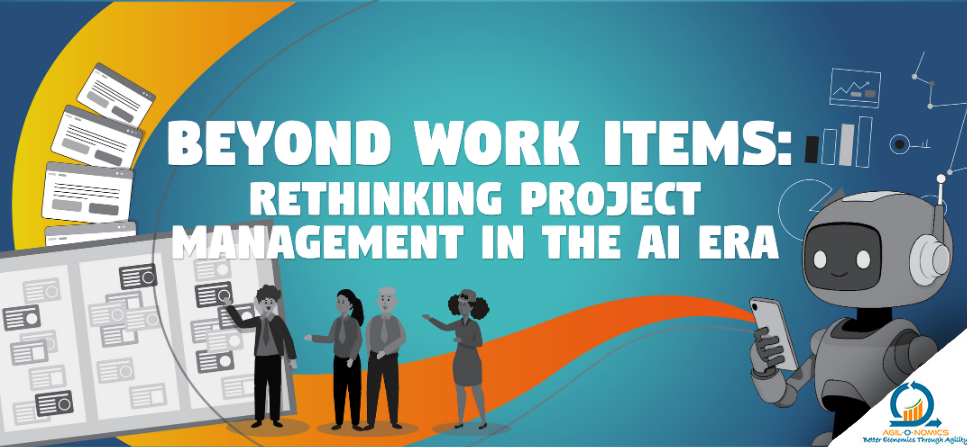
Beyond Work Items: Rethinking Project Management in the AI Era

For decades, project management has relied on one central artifact: the work item. Tasks, stories, or issues get broken down, logged, and tracked across boards and workflows. This approach gave teams visibility and structure, but it also created a heavy reliance on manual updates. Today, with the rapid rise of AI, we have to ask: do we still need to manage every piece of work through static items, or is there a smarter way to organize and deliver? Supercharging Teams Beyond Status Updates Work items were never the real goal. They were meant to create alignment, ensure nothing slipped through the cracks, and provide leaders with a sense of progress. Yet in many teams, they became a chore—filled out reluctantly, updated inconsistently, and checked more for compliance than collaboration. This is where AI in project management changes the equation. Conversations can now be transcribed and tagged automatically. Meeting insights can be converted into action items without manual input. Dependencies can be spotted in real time. Instead of relying on work items as the only source of truth, teams can lean on intelligent systems that update themselves.With this shift, teams move from administrating work to delivering value. A team supercharged by AI spends less time maintaining boards and more time focusing on outcomes. The conversation shifts from, “Did you update the work item?” to, “What do we deliver next?” A Process That Actually Works Some may wonder: without work items, how do we keep structure? The reality is that work items alone never guarantee a good process. They reflected it—or revealed the lack of it. A process that works in the AI era is less about rigid artifact management and more about seamless coordination. Intelligent tools can surface patterns, highlight risks, and provide reminders when needed. Leaders can shift their energy from monitoring updates to guiding direction. Teams gain back time for collaboration that creates real impact. The key is moving from work-item-driven project management to outcome-driven project management. That means: The Future of Technology and Tools If work items shaped the last generation of project management, AI-powered platforms will shape the next. Tools are no longer passive repositories of information; they are becoming active partners in execution. Picture a platform that: This isn’t far-off speculation—it’s already happening. The question is whether leaders will continue to center their processes on manual work items or embrace tools that extend human capability. Technology, however, is not a substitute for leadership. No system can create trust, resolve conflict, or set vision. Servant Leadership and leaders who empower rather than control will make a huge difference on how effective are your AI tools So, while AI tools work to remove administrative drag and provide clarity at scale, leaders and teams will get the space to focus on the human side of project management. What We Stand to Gain So, do we really need work items anymore? Not in the way we once did. They may still serve compliance or large-scale coordination needs. But as AI reshapes project management, the reliance on static work items will shrink. What emerges instead is a more natural rhythm of work: The real shift is not about abandoning structure but about reimagining project management with AI as an enabler. The future will not be measured by how many work items a team closes, but by how effectively they deliver value to the people they serve.

Agile everywhere: transforming non-IT teams for greater value delivery

Agile Everywhere: Transforming Non-IT Teams for Greater Value Delivery

Agile was born in the world of software development, but its values and principles extend far beyond coding. Despite this, many people still believe, “Agile is only for IT.” It’s a mindset that has kept countless non-IT teams from exploring its transformative potential. Agile is not just about frameworks or ceremonies. It’s for delivering value, nurturing collaboration, and continuously improving. When applied thoughtfully, it can empower any team—documentation, sales, research, or beyond—to work better together and deliver meaningful results. Let me share what I’ve learned about overcoming challenges and bringing Agile to life in non-IT teams. Agile in Non-IT Departments: Common Challenges Mindset BarriersIt’s no surprise that non-IT teams often hesitate to adopt Agile. I’ve seen this hesitation firsthand. The central documentation group at a large enterprise once asked me, “What do we need to do to become the best Scrum team?” My answer was simple: “Why Scrum?” Scrum comes with its own set of overheads – events and structures, and Agile should not be about blindly following a framework. Instead, we stripped it down to what mattered most: By focusing on these fundamentals, the team found their rhythm. They didn’t need ceremonies for the sake of ceremonies—they needed clarity, collaboration, and alignment. Seeing their transformation reaffirmed for me that Agile is about principles, not labels. Siloed Work PracticesSilos are a killer for collaboration. I’ve seen this play out with a biomedical sales team I worked with. At the start, the team was simply set up to fail: It was chaos. The team’s struggles weren’t about “bad Agile.” They were trying to fit Agile into their silos instead of using Agile to break them down. We started by splitting the group into three smaller Scrum teams. Everyone came together to create working agreements, and I worked closely with the Product Owners to help them write simpler, more valuable stories. Slowly, the blame game between developers and POs started fading. It wasn’t an overnight change, but as people began turning their cameras on during meetings, I saw trust growing. By the time the teams hit their stride, they were collaborating like never before—and their delivery reflected it. Resistance to ChangeChange is hard, especially for teams rooted in traditional ways of working. When I worked with a group of research scientists, I saw this resistance play out in full force. Senior researchers were hesitant to share their work openly. Ego and trust issues created a wall that prevented true collaboration. We began small: standups three times a week, focusing on pairing researchers to tackle key problems. The early days weren’t easy. Conversations were guarded, and progress was slow. But with time, things started shifting. Refinement sessions became powerful, timeboxed discussions. Outcomes—not just outputs—began driving their reviews. Three months later, this team that once doubted Agile was running daily standups and solving problems together. I’ll never forget the moment one senior researcher admitted, “This is the first time I’ve felt like part of a team.” Moments like that remind me why Agile isn’t just a methodology—it’s a mindset shift that impacts behaviors and culture by establishing the human connection. Adapting Agile Values for Non-IT TeamsAgile is not a one-size-fits-all solution, but its values can be adapted to fit any team’s unique challenges. Here’s how you can start: When non-IT teams embrace these principles, they unlock the flexibility and focus they need to thrive. Conclusion Agile doesn’t belong to IT—it belongs to anyone willing to embrace its values. Whether you’re in sales, research, or documentation and beyond, Agile can transform the way you work, connect, and deliver. What’s holding your team back from trying Agile? Share your biggest challenges—I’d love to hear how you’re making it work in your world. Please connect with us to help onboard your non-IT teams to Agile. This post combines the author’s personal thoughts, ideas, and experiences, with some refinement provided by our Agile Bot AgiNomi.
For Best Agile Transformation, Choose the Right People

Understand the Importance of Choosing the Right People for Agile Transformation: In my 20+ years of association with software development, one thing I’ve realized is how important it is to select the right people for an Agile transformation. These transformations are costly—both in terms of time and resources—so it’s crucial to get it right from the start. It’s more than just coaching the developers; you need managers, leaders, specialists, and executives all working together.  Even just talking to teams and individuals to find out if they will genuinely support the transformation can be time-consuming and energy-draining. Agile has huge potential if implemented wisely. But many organizations are still recovering from previous failed experiences. VPs often ask me, “Amit, can you kick off the introductory leadership meeting without using the words ‘Agile’ or ‘Scrum’?” This is because past attempts burned people. They were stuck in a mindset that focused on forced ceremonies, checklist Agile, rebranding roles without actually influencing behaviors. Teams went through the motions, but the desired outcomes were not achieved. This is why it’s so important to pick the right people. You need your initial teams to succeed, and the transformation has to be lasting and valuable for everyone involved.  In my experience, the key is building teams that work like a cohesive unit—teams that tackle problems together and come out winning every time. Major Characteristics of Agile Leaders: In any Agile transformation, the people leading or participating need to have certain key qualities.  First, they must practice servant leadership. These are the leaders who truly support their teams, creating an environment where collaboration and innovation can thrive. You also need visionaries—people who can see the big picture, not just at the product level but at the process level too. Leaders must walk the talk. They need to stay open to ideas from their teams, look at how others have succeeded, and learn from those experiences. Patience, perseverance, and a balance of firmness with kindness are essential qualities. When leaders behave this way, they empower their people and help cut down on bureaucracy. In fact, an article from Harvard Business Review talks about a concept called Organizational Network Analysis (ONA), which suggests that identifying key influencers in an organization can help transformations succeed. But I believe it misses a critical point. Success is not merely choosing the right “star people.” It’s really about creating a culture where people feel safe to step up. This is why having an experienced coach who understands the human side of Agile is so important. For example, bringing in systems thinking in product development can make all the difference. Many Agile teams focus on velocity, burndown charts, and predictability, but those metrics don’t always prove customer value. Teams need to build visual maps and align on the bigger picture to create a development strategy that tackles competition, risks, and desired outcomes. This can take time to learn, and sometimes Product Managers push back because they’re used to working at a fast pace with short cuts. But when done right, this approach sets teams up for long-term success. Agile visionaries, working with experienced coaches, make this kind of big-picture thinking possible. Don’t rush through work to get outputs. Rather, build a solid foundation for lasting agility and get to your desired outcomes. The Danger of working with Wrong People Agile transformations can fail when the wrong people are chosen. Too often, companies try to save money by hiring inexperienced or cheap Agile coaches. Just having the title “Agile Coach” doesn’t make someone qualified. A good coach needs real-world experience including both success and failure, and strong people skills to guide teams through the process. Read: Why Agile Coaching is Essential for Teams Transformations I’ve seen this happen before. I was brought in to fix a failed transformation at a large enterprise where multiple coaches were  fired due to conflicts with employees enforcing practices without proper buy in. This wasted time and money for the organization. The Right Mix of Technical Expertise and Agile Mindset I often emphasize Test-Driven Development (TDD) and systems thinking because they are crucial for building high-quality products quickly. TDD allows teams to move at a high velocity with confidence, knowing that their code is well-tested and reliable. Creating cross-functional teams is just as important. You need to nurture teams that can handle multiple tasks, not just rely on specialists. This ensures flexibility and collaboration across the board. Unfortunately, many teams prioritize the backlog based on available skills instead of value. Leaders need to take ownership, put their foot down, be firm in setting expectations, and support their teams in learning new skills to ensure long-term success. The HBR article on Organizational Network Analysis (ONA) touches on identifying key influencers, but real change comes when leaders actively guide teams and are part of the journey. And here’s a funny thing I’ve noticed—testers are often treated as specialists, reporting to another department. In today’s Agile world, everyone should be able to do everything, and practices like pairing and swarming can help make that a reality.

Transform Your Team, Elevate Your Business!

Subscribe to the Agilonomics Newsletter and Claim Your Free Power Team Consultation Today!

We promise to keep your email address safe. You can check our Privacy Policy.

Thank you for subscribing to our Agile Wisdome - Weekly Tips!

You’re almost there! Please check your email and click the confirmation link to complete your subscription. If you don’t see the email, be sure to check your spam folder.

Privacy Overview

This website uses cookies so that we can provide you with the best user experience possible. Cookie information is stored in your browser and performs functions such as recognizing you when you return to our website and helping our team to understand which sections of the website you find most interesting and useful.

Strictly Necessary Cookies

Strictly necessary cookies are enabled at all times so that our website can function optimally.

3rd Party Cookies

Our website uses Google Analytics to collect useful information. These cookies are used by us to build a profile of interest and show you relevant offers.

Keeping these cookies enabled helps us to improve our website and your experience.